Cake and Courage

One of the major reality shifts I described in my last post — leaving my first marriage — contained a very ordinary moment. Yet, three decades later, I still remember it clearly. So it can’t have been that small.

The marriage involved a considerable amount of money. I needed a property settlement lawyer, so I went into the city. At thirty-three, I didn’t understand what a property settlement was or how it worked. In fact, I had no idea what would happen or what I might be entitled to. For all I knew, I could walk away with nothing. I had two young children to raise, and I wasn’t working outside the home.

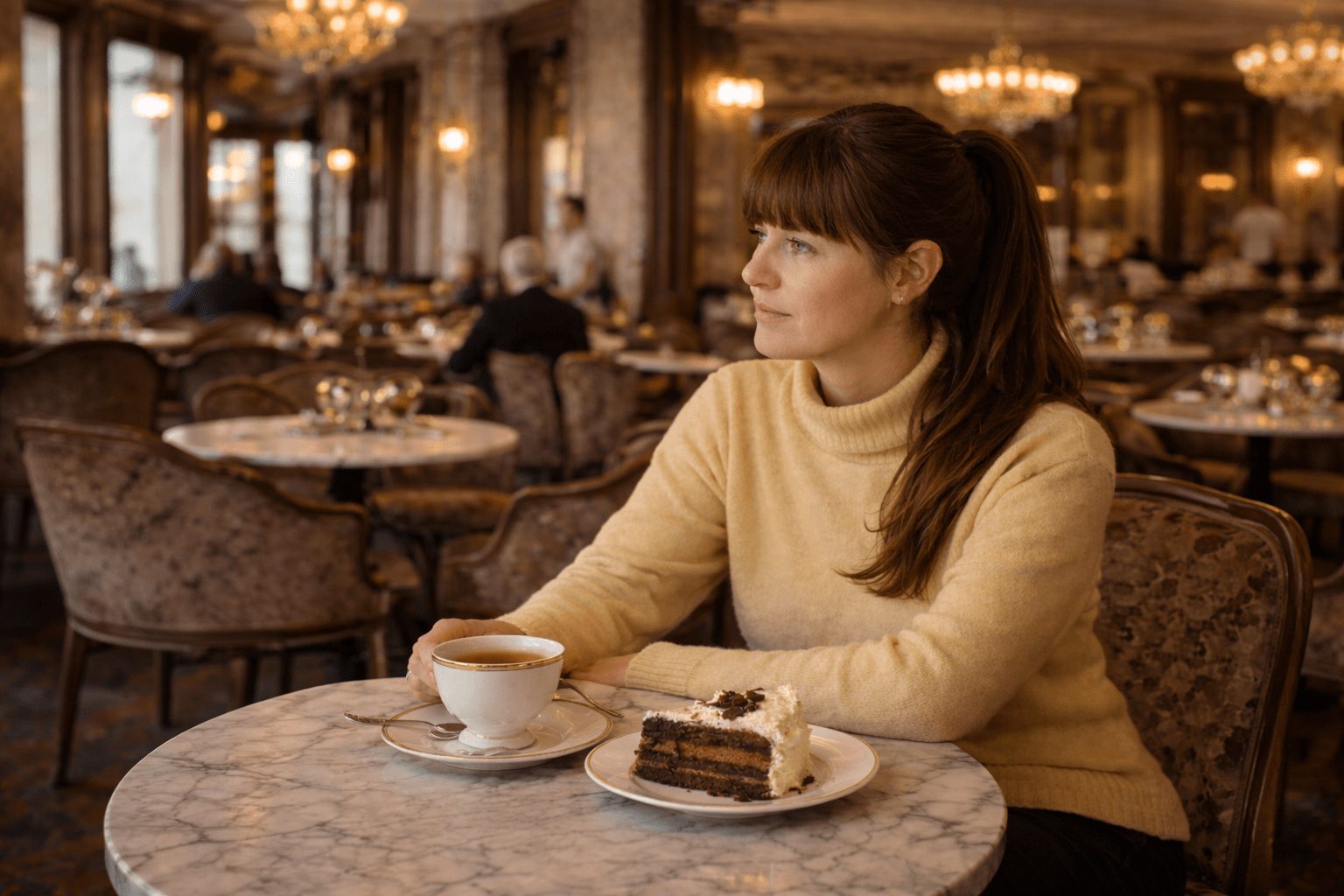
I went to the lawyer, and we discussed some initial details, but it was only a first visit. I still didn’t understand what was going to happen. The lawyer’s office was in an elegant building. When the meeting finished, I went downstairs to a cafe. It was the kind of place that feels expensive — and is. I ordered a cup of tea and a piece of cake. An expensive cup of tea. An expensive piece of cake.

Continue reading “Cake and Courage”

Consciousness Continuing: Many Lives in One

This is the opening chapter of Consciousness Continuing, the second book in the Consciousness Series. The first book of the series, Consciousness Rising, was published in October 2025. This chapter explores the experience of living many lives within one lifetime.

Consciousness does not improve itself over time. It relocates into realities where different versions of itself are viable.

Chapter 1: Many Lives in One

I have long felt that I’ve lived many lifetimes inside one life. I felt it before I ever heard words like parallel realities or shifting timelines, long before I encountered teachings about reality shifts. It is a lived experience. Entire worlds have closed behind me, and new ones opened — sometimes abruptly, sometimes over the space of several years — but always completely. 

My life feels less like a single story and more like a series of distinct realities, each with its own version of me. Perhaps you feel this way too, even if you don’t yet have the language for it.

I’ll describe my major shifts here, as they may help you recognise your own.

Continue reading “Consciousness Continuing: Many Lives in One”

The Voice that Doesn’t Belong to You

Getting Nowhere Fast

Many people who are already on a path of personal or spiritual development are clear about what they want. They’ve made that choice. They want to feel happier and more at ease in themselves. They want abundance to flow. They want work that feels right, relationships that are nourishing, and a sense of inner freedom rather than constant anxiety or self-doubt.

And yet, despite that clarity, something keeps pulling them back. Progress doesn’t seem to move in the way they expect, or at the pace they would like. Old patterns reappear. Familiar struggles return. Sometimes they find themselves making choices they already know don’t serve them, and afterwards they’re left wondering why they did it again when they could see, perfectly well, where they wanted to go.

This can be confusing and often discouraging, especially when someone feels they are doing “the right things” and that they genuinely want change.

Continue reading “The Voice that Doesn’t Belong to You”

Spirituality — Spoken or Felt

Spoken Spirituality

Some spiritual teachings and teachers help us understand ourselves by giving us words and concepts. Their teachings often feel emotionally supportive, intellectually reassuring, and foundational. People like to share them, talk about them, and say, “Yes, this is me too. This is what I believe.”

Well-known teachers who work in this way include Deepak Chopra, Wayne Dyer, and Marianne Williamson. Their work helps people orient themselves, reflect, and build language for what is happening and where they are headed.

Spiritual teachings that work through ideas and explanations tend to suit cultures and people who like to talk things through, define themselves, and understand where they stand — the Western world. These teachings travel well through books (especially socially-sanctioned best-sellers), in discussion, and via social media sharing. They give people meaningful spiritual language that they can use to identify themselves.

Felt Spirituality

Other spiritual teachings help us to feel our way back into ourselves. Much is left unsaid. Not a lot is explained. They don’t give us many concepts to hold onto. Instead, they work through tone, presence, vibration, and silence. Often we can’t easily say what they’ve done — only that something has softened or changed inside us.

This kind of spirituality is less often shared or discussed because it doesn’t give us language to stand on. It asks us to be without explanation. There is no position to take, no insight to display, no sense of progress to claim. That can feel unsettling. But for some, it feels like home.

Continue reading “Spirituality — Spoken or Felt”

Grief: Loss or Learning

When we lose someone deeply woven into the fabric of our lives—it could be a partner, a parent, a child, a sibling, or a close friend—grief is the natural human response. When lives have been intimately shared, their absence forces us to find a new way of being, sometimes at many different levels. 

For most people, the grieving process typically lasts one to three years. During that time, emotions rise and fall, and the experience can feel somewhat similar to depression—not in a negative sense, but as a turning inward. Grief asks us to withdraw, to reform ourselves, and to create a new life structure after something central has been taken away. Depression, when used positively, is a similar process. It is a reformulation of ourselves.

Your connection with your loved one is irreplaceable and unbroken. The question is how you wish to experience this human journey and whether you choose to allow grief to become a doorway into transformation and a deeper awareness of love.

Inwards or Outwards: Preference and Purpose

At a certain stage of spiritual evolution, solitude arises naturally. It is not avoidance, but a way of keeping one’s field clear. Ordinary interaction can feel noisy, fear-driven, or self-reinforcing. Solitude restores clarity.

But not everyone at this stage of consciousness seeks solitude. Some are drawn into human fields because their life purpose is to serve, teach, or engage. Probably, more than half of seekers at this level find that their path requires long stretches of nature or withdrawal. The remaining are called outward. Their purpose demands a greater tolerance for and enjoyment of human interaction. The difference is not about higher or lower, but purpose.

A Walk in the Park: The Company We Keep on the Spiritual Path

As you mature spiritually, the tendency toward solitude is very common. The reasons for this are:

  1. The field of the collective is keenly felt—you’re porous enough to be affected, even though you can hold steady for stretches.
  2. You’ve outgrown fear-driven socialising, so you don’t need interaction for validation or distraction.
  3. You seek resonance. As resonance is frequently absent in human situations, solitude feels like a better frequency match.

The question is not really whether we choose aloneness or togetherness, but what frequency we are vibrating at. If people are honest, most encounters with others are shaped by fear, by the need for reassurance, or by the desire to confirm a sense of self. These patterns are so common that they feel normal, but what is sought always fails to fulfil.

Light Touch: The Frequency of Sex

What makes intimacy work?

  1. Self-acceptance. A person who accepts their own body can accept another’s. Without this, sex becomes a struggle with shame or resistance.
  2. Presence. You do not need spiritual knowledge to be present. You only need to be there—not lost in thought, not somewhere else.
  3. Equality. Sex needs to be an equal exchange, a shared creation. Both must feel that their experience matters—not as pretence, but in truth.
  4. Fearlessness. Fear closes the body. Trust opens it. When there is a sense that “however this unfolds, it’s alright,” the body relaxes and energy rises. Even if it doesn’t work, then that is the unfoldment. It is that way for a reason, usually to learn something valuable.