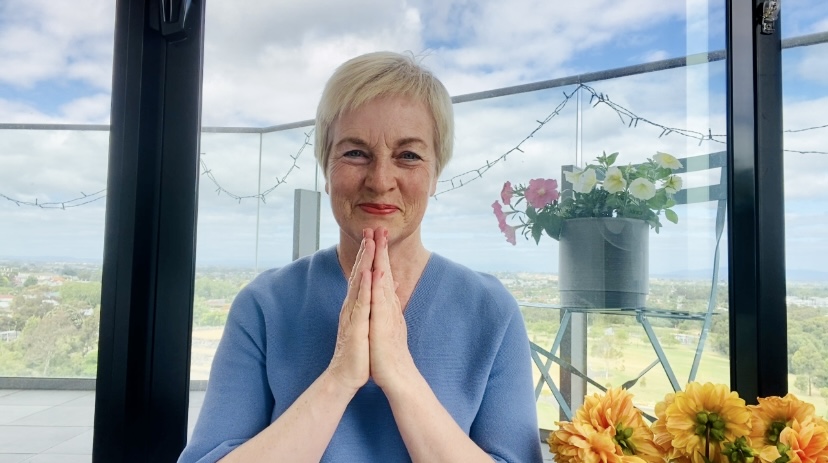
Donna Goddard shares her love for the Divine and the world with a large international audience and has a strong social media presence. She has authored about twenty books on spirituality and personal growth—nonfiction, fiction, children’s fiction, poetry, and specialty books in writing and dance.
Happy new year, 2022. May you make the most of this year. Here is the beginning of a new story to start the year!
Nanima lay in a pretty-as-a-picture valley at the joining point of two living, breathing rivers. The small country town had an English name, but Nanima was its ancient-as-the-rivers Aboriginal one. When discovering it, English explorer, Oxley, said, “It is beautifully picturesque.” Of course, he didn’t really discover it. Even before the local people knew it, the valley and rivers knew themselves.
When you live from the land, which ultimately all of us do, soil is everything. Forgetting this is at our peril. The rich Nanima soil spread its generosity well beyond the banks of the rivers and fed the trees, the long-time people, the soon-to-arrive Chinese who would befriend the Aborigines as fellow under-rated people, and the incoming white folk with their eyes on grain and stock. Amongst the early white settlers were men who were good and men who were bad. Either way, the soil and rivers fed them, their children, and their grandchildren.
Somewhere along the way, there develops within the soul a yearning that can no longer be ignored; a craving for the great Love affair. We feel it drawing ever closer. It is the greatest of them all. It cannot fail. It is all-consuming. It is incomparable. It is the love affair with our own true nature and the source from which it comes. The desire is in all of us but, more often than not, it is ignored for other interests. We wrestle with each interest, trying to make it work, growing with each adventure until the light has grown bright enough for us to reach for it.
We love with all our heart, in every way that we can love, but the heart is not burdened. We learn to keep it light and pliable. It has space. It breathes. It waits on Life to give instructions. It sings with sweetness when the winds are soft and warm. It stands with calm patience when the storm is brewing. It lets go when death and seeming endings have left their irrefutable mark. It moves. It heals. It hopes. It allows Life to be lived in the safe, fertile, and still inner space where it grows stronger and more compelling every day.
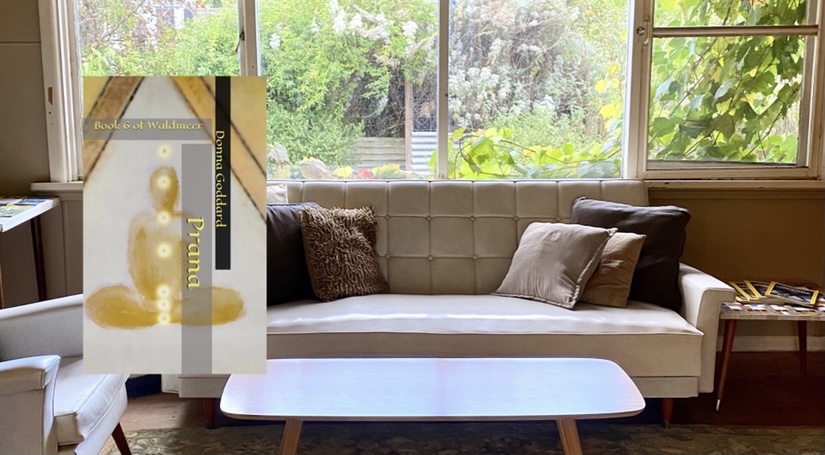
“How deeply and unknowingly we are all connected. Life knows us all and plays with our interconnectedness.” From Purnima (final section)
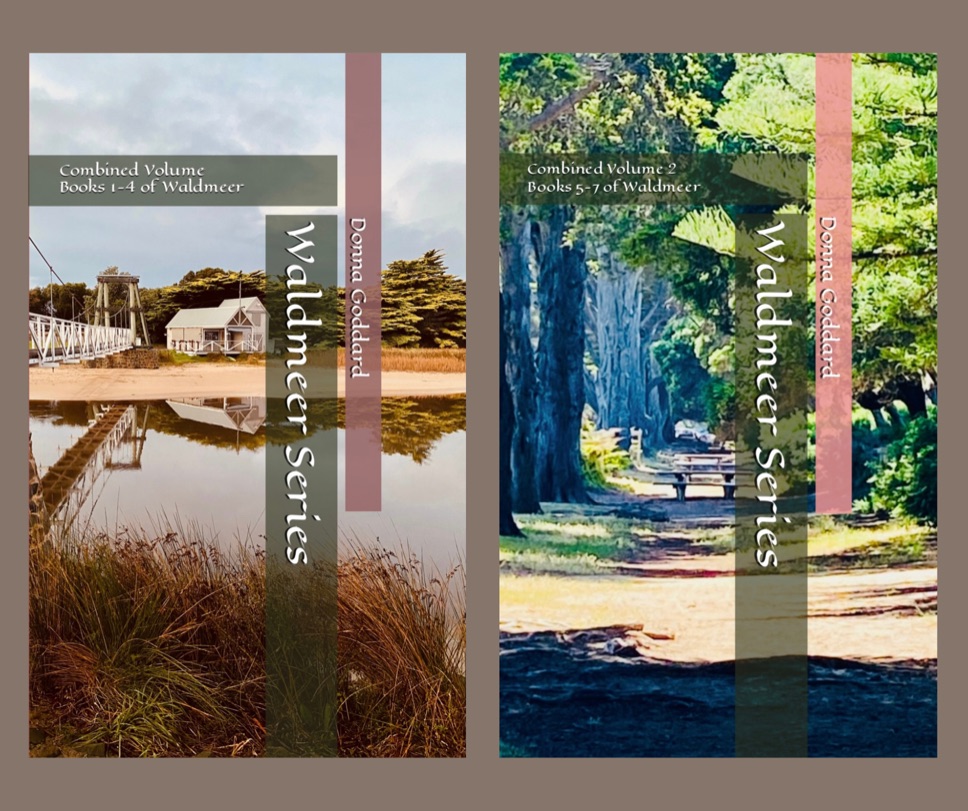
Thank you for journeying with me for the past 5 years of the Waldmeer Series. Your energy has contributed greatly to the evolution and continuation of the series.
Writing is a long-term career. It takes a lot of time, money, perseverance, learning, and soul. Making a mark as a writer and having an influence in the world is a process which generally accelerates slowly.
Keep going.
Keep giving.
Remain true.
Trust your instincts.
Go with the flow.
Do your best.
Enjoy it.
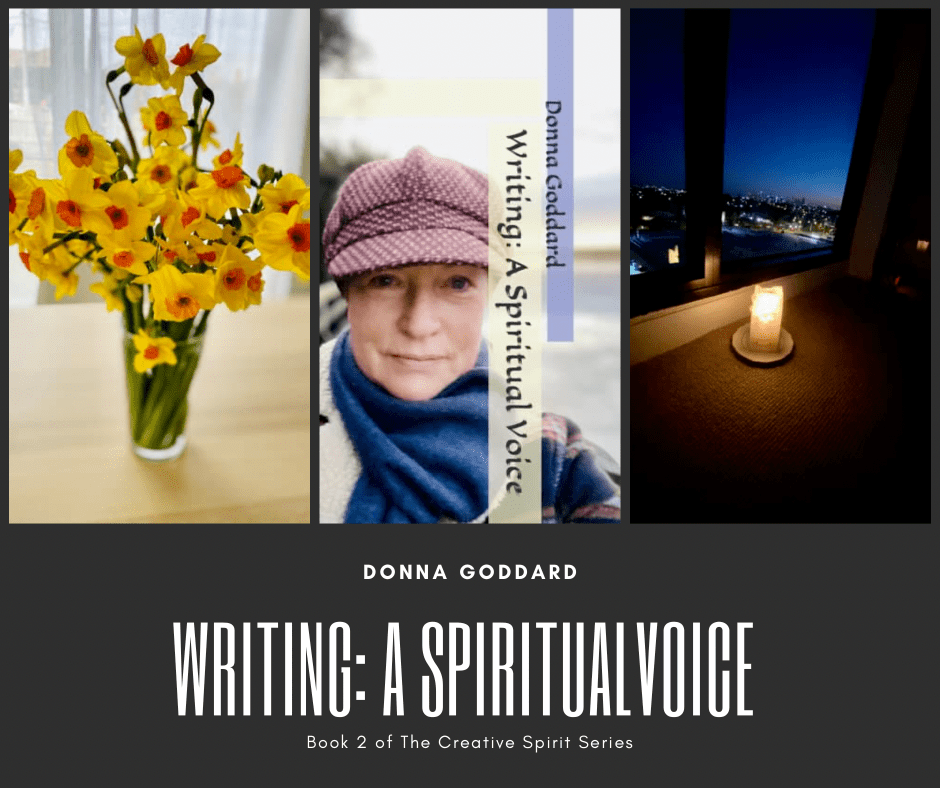
If you know that the spiritual voice is in you, and you would like greater access to it as a writer, then Writing: A Spiritual Voice can help you to develop your capacity to hear and heed that voice.
After six months of living in Store Creek with the cold weather, it was good to finally arrive at spring’s doorstep. Merlyn wondered if that was why Ben had decided to visit today. He said it was a rental inspection. But that was just a joke. At least, Merlyn hoped it was a joke. Although it was two years since their separation, they had been married for three years. Nothing needed inspecting. Merlyn’s mind was put at ease once he arrived. He appeared to have no interest in checking on anything. He chatted for an hour or two before saying that it was time to return to the city and that he had a big week ahead of him at the State Ballet.
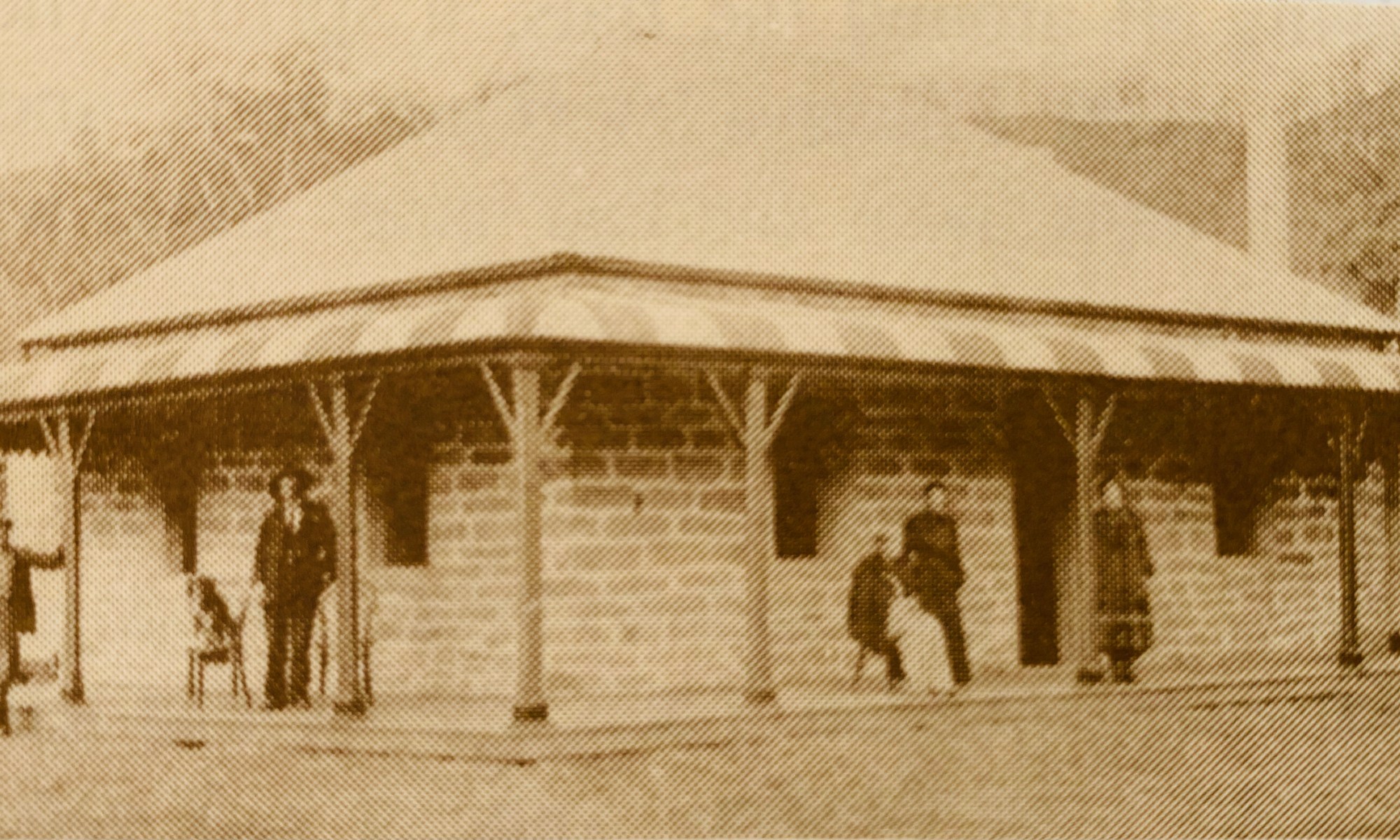
My grandfather, Michael John Pope, was a pioneer farmer in outback New South Wales, Australia. He built his small, four-room home, Little Oakey, from the creek-stones of the area. Behind the house was a wattle and daub (clay) kitchen and cellar. In that little home with his wife, Mary Jane, he raised five children in what would be considered, by today’s standards, primitive isolation. Such was life in the outback. It was and, essentially, still is harsh, relentless, and intensely beautiful. It becomes part of the soul and is embedded into one’s psyche as primal home.
Spring had come and gone in Waldmeer and it was well into summer. As Waldmeer is in the Southern Hemisphere, summer carries with it a new year. Gabriel and Aristotle were travelling in the car to Waldmeer from Gabriel’s apartment in Darnall. It was Aristotle’s idea. Gabriel didn’t like going to Waldmeer anymore. Since Amira had mysteriously disappeared in early spring and her nasty cousin, Eve, had taken over the house, the whole of Waldmeer felt different. It was as if a light had gone out and a dark cloud had spread over the town. Nevertheless, Aristotle wanted to visit, so Gabriel said yes. Gabriel said yes to almost everything Aristotle wanted.
The fruits of serious spiritual devotion have an unmistakable flavour, sometimes even more retrospectively. It had been a challenging few years. I was twenty-six and had been progressing through an existential crisis, an involuntary falling apart of life’s meaning. I felt a profound human aloneness, and with all my praying, I failed to feel God’s love in any way that could help my state of being. Besides the care and protection of my two little children and my spiritual studies, I had no interest in anything. Everything seemed trite to me, meaningless and often painfully intolerable. I had lost faith in everything human to give solace to my soul. It was not intentional. It is simply what happened over the space of a few years. I was at the bottom of the valley—all things lost, but nothing gained.
What else could I do but pray? Only God could rescue me. I did not doubt that God would do so, but first, it seemed that all would be taken away so that new ground would be available for working with. One morning, during the earlier years of this struggle, I walked along a path at a quiet beach near our home. I had my toddler in a stroller and my baby in a tie-on carrier. It was a beautiful suburb in seaside Sydney and all the more beautiful for the glorious day. However, try as I did, none of this had any ability to lift my spirits.
The preceding few days had been particularly difficult. Even the tiny bit of hope I was given after prayer seemed to have disappeared. Tears of grief and despair were my increasingly constant companion, though I knew not what I grieved. Much later, I realised it was the necessary grieving that accompanies the loosening of the ego’s hold over our consciousness. It is the inevitable struggle of being born human, yet the soul seeks release from the bondage of thought that constantly revolves around the precious one—ourselves. We grow up trying to develop enough of an ego to be able to survive and thrive in the world. That, in itself, is a mighty effort. Even before we have it mastered, the deeper Self starts speaking to us, whispering in our ear that this life is not enough. Then we, almost without noticing, begin the quest to pull apart the ego we so courageously tried to build.
Having no other option but to go forward, I walked along the beach boardwalk with my little ones hoping that the natural beauty would, even marginally, rescue me. After a while, I must have forgotten about myself. I was looking out to sea, and the grandness of it all caught my attention. I forgot, for a moment, to feel so bad. That was the chance. And given a chance, It came rushing in. It was so brief that it was over before I even noticed it. But there it was, nevertheless, unmistakable. It came like an invisible breeze brushing past me, coming from the sea, returning beyond, into the Infinite. It wasn’t a breeze. It was the breath of God.
As soon as it went, I called internally, No, stop! Come back. I have been trying to find you. Stay with me. I need you.
I knew it was the Divine by the lightness it brought. It was a sweet presence, softening the mind. It was a very welcome breath of fresh air. It could not stay at that time, but it would later return and become a progressively more comfortable acquaintance. The veil was beginning to part.
If we can’t see people clearly, we can end up trusting people and situations that are not in our best interest and dismissing people and situations that would make our life better and happier. It is not just in regards to little things, but if we understand the far-reaching and powerful effect of thought, we realise that it can even be a life-and-death matter. Thought is very powerful, and the underlying intention is everything.
What is This For?
To get to the underlying intention of anything, it helps to ask ourselves, What is this for? We can ask it about everything. Eventually, it is not necessary to ask it so often as experience and wisdom lead the way with little effort. Once asked, we must listen for the answer. Don’t listen to the ego’s answer. Its answer will usually be the opposite of the truth. Ask with an open mind. If we discover that we are deceiving ourselves about some matter or that we have been deceived by someone else (intentionally or not), then that is a good discovery. Once we know what a particular venture or relationship is based on, we will also know its outcome. To those inexperienced in such thought processes, this may seem like magic or foolishness. It is not magic. It is simply understanding the human mind. And it is not foolish. Those who do not understand their own minds can never be fulfilled or happy.